
Restitution
What is Restitution?
In Idaho, restitution is court-ordered compensation from a criminal defendant to a victim to cover direct out-of-pocket, financial losses caused by the crime. These expenses may be medical bills, counseling, property damage or lost wages. Victims will likely be asked to submit a restitution statement along with bills or receipts to the prosecuting attorney’s office. Most offices will supply a form to the victim for this purpose.
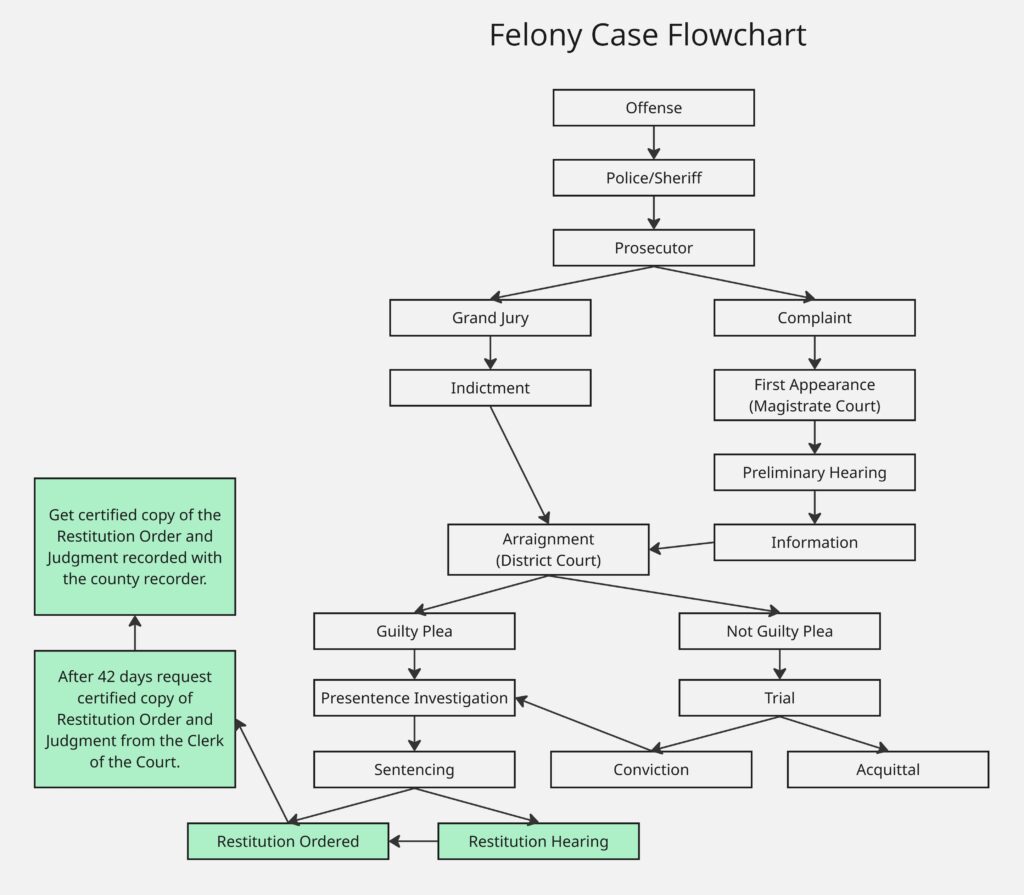
If the defendant is convicted, and there are financial losses to the victim, the prosecuting attorney will petition the court to order restitution. This may include a separate restitution hearing in some instances.
Under Idaho Code § 19-5304, judges are required to order restitution in criminal and juvenile cases unless they deem it inappropriate.
When restitution is awarded, the court issues an Order of Restitution and Judgment.
Enforcing an Order of Restitution and Judgment
Restitution orders may be enforced through the criminal justice system as a condition of probation or parole, with payments collected by the County Clerk or Court. Victims are encouraged to talk to prosecuting attorneys/victim witness coordinators about the process for enforcement.
Victims Can Enforce an Order of Restitution and Judgment
Victims can take steps to enforce an Order of Restitution and Judgment. The first step is to ask for a certified copy of the order. This copy can be requested from the criminal or juvenile court that issued it. There is a fee for getting the certified copy.
After receiving the certified copy, it can be filed with the County Recorder. There is also a fee to record it. The judgment can be recorded 42 days after the order is entered (Idaho Code 19‑5305(1)).
Once the Order for Restitution and Judgment is recorded, it becomes a civil judgment. The lien created by this judgment lasts for twenty (20) years from the date it was entered (Idaho Code 11‑101).
A civil judgment means the debt can be collected through legal methods. These methods may include liens on non‑exempt property, wage garnishment, or writs of execution. A private attorney can help victims understand how to enforce a civil judgment and decide which collection method is best.
Restitution and the Crime Victims Compensation Program (CVCP)
How CVCP Helps Victims
The Crime Victims Compensation Program (CVCP) can help pay for certain crime‑related expenses when a victim is found eligible for benefits. These payments might cover things like medical bills or counseling.
If the offender is convicted, CVCP will ask the court to order restitution for the money the program paid. Victims do not need to report these payments themselves. CVCP works directly with the prosecuting attorney’s office to share the information needed.
CVCP as a “Victim” for Restitution
When CVCP pays for a victim’s expenses, the law allows the program to be treated like a “victim” for restitution purposes. This means CVCP can request restitution for the costs it covered.
This request is separate from the restitution the prosecutor asks for on behalf of the victim for expenses not paid by CVCP.